

Verdict
The OnePlus 10 Pro notches up some impressive wins with its brilliant screen, fast-charging, and reliable performance. However, the design might not be to everyone’s taste, and the camera system is not the best you can get for the money, especially when compared to Google, Apple and Samsung’s current flagships.
Pros
- Great screen
- Good performance
- Pleasing matte finish
- More affordable than other flagships
Cons
- Divisive design
- Camera isn’t best in class
Availability
- UKRRP: £799
- USATBC
- EuropeRRP: €899
- CanadaTBC
- AustraliaTBC
-
Three rear camerasVersatile wide, ultra wide and zoom cameras alongside Hasselblad software -
It’ll charge very quicklyThe included 80w charger shouldn’t take long to charge
Introduction
OnePlus has now firmly established itself as a leading Android manufacturer that tends to offer fantastic performance levels for a good price. The OnePlus 10 Pro was the flagship device from the brand for 2022.
In 2023, the OnePlus 11 sits as the flagship device from the Oppo sister brand and while it lacks the ‘Pro’ moniker this is the true replacement for the OnePlus 10 Pro.
You can read our full review of the OnePlus 10 Pro below, but it must be said that you should look at the OnePlus 11 – which has a much better camera – if you’re after a new phone from the brand.
Design and Screen
- Nice matte rear panel
- Obtrusive camera module
- No IP rating
- Excellent screen
The OnePlus 10 Pro has a distinctive design, and I think it will be divisive among buyers.
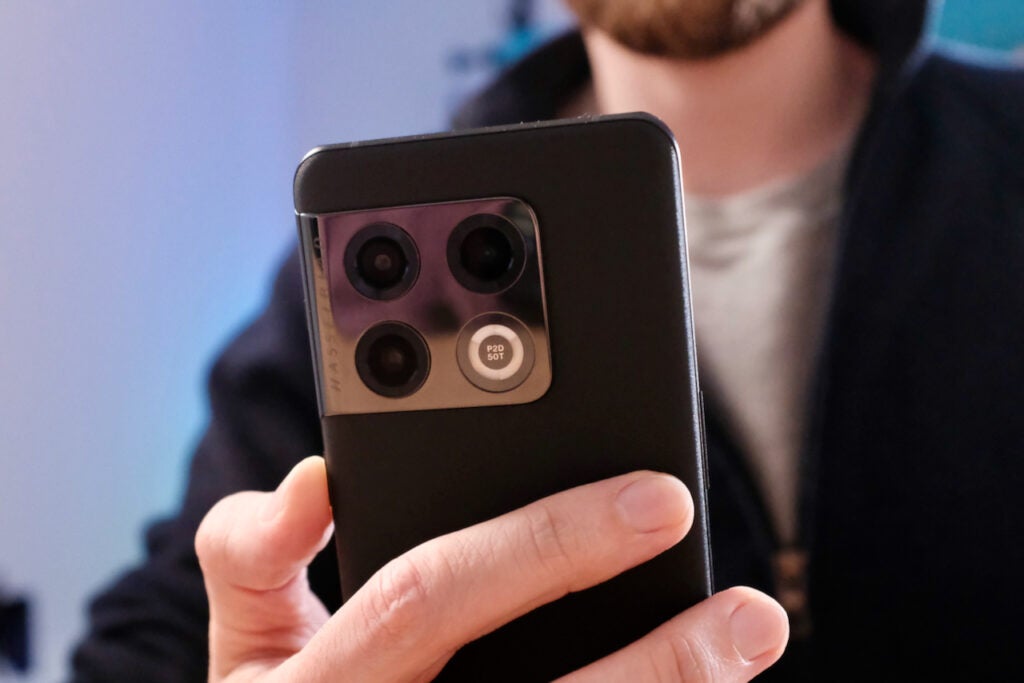
The camera module is very large, taking up a significant portion of the rear panel with its three huge lenses. Being blunt, the design is not elegant in the slightest compared to what else is on the market at the moment.
The Samsung Galaxy S22 Plus, for example, has its camera sensors tucked away in a rounded camera module at the top corner of its back. The OnePlus 10 Pro’s sprawls out over a much larger area and draws a lot of attention to itself due to the glossy finish, which contrasts with the more subdued matte panel that occupies the rest of the rear.
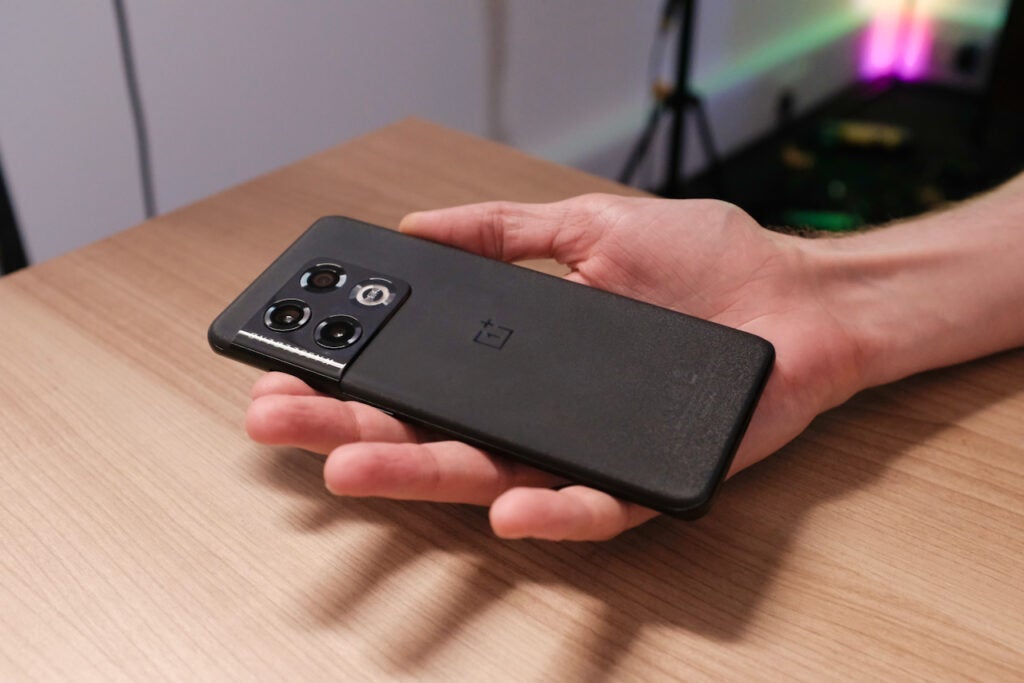
The more I’ve used it, the more it has grown on me (at least in the Volcanic Black colour scheme, though it looks less easy on the eyes in the Forest Green version), but I don’t expect it to be universally loved.
I do however really like the matte finish on the back. Not only is it practical, as it doesn’t pick up the fingerprints that glossy back panels often do, but it also feels pleasant and comfortable to the touch.
There are dual speakers here, one just above the screen and the other, more powerful one at the base of the phone. You won’t get the rounded sound that you would from a standalone speaker, but it’s still fairly punchy.
One of the more unusual design choices is the Alert Slider on the right hand side of the device that controls the feedback from notifications. This means you can easily flit between the three settings of Silent, Vibrate, and Ring, without having to unlock the device and delve into your phone’s settings. It’s a welcome feature, however it is very easy to budge it accidentally when you tuck the phone into your pocket based on my experience. In general I liked the feedback of this handset, which had some quite charming sound effects and a fairly strong vibration motor.
Ever since the infamous JerryRigEverything video appeared to show this device snapping in half with apparent ease, there have been questions raised about just how robust the handset is. After using it for over a week, all I can say is that I never once encountered any problems or had any concerns during my time with it, but I never tried to snap it in half. There’s no official IP rating, so we’re not exactly sure how it would cope if splashed or dunked in water. This is an odd change, considering the previous OnePlus flagship was IP68 rated.
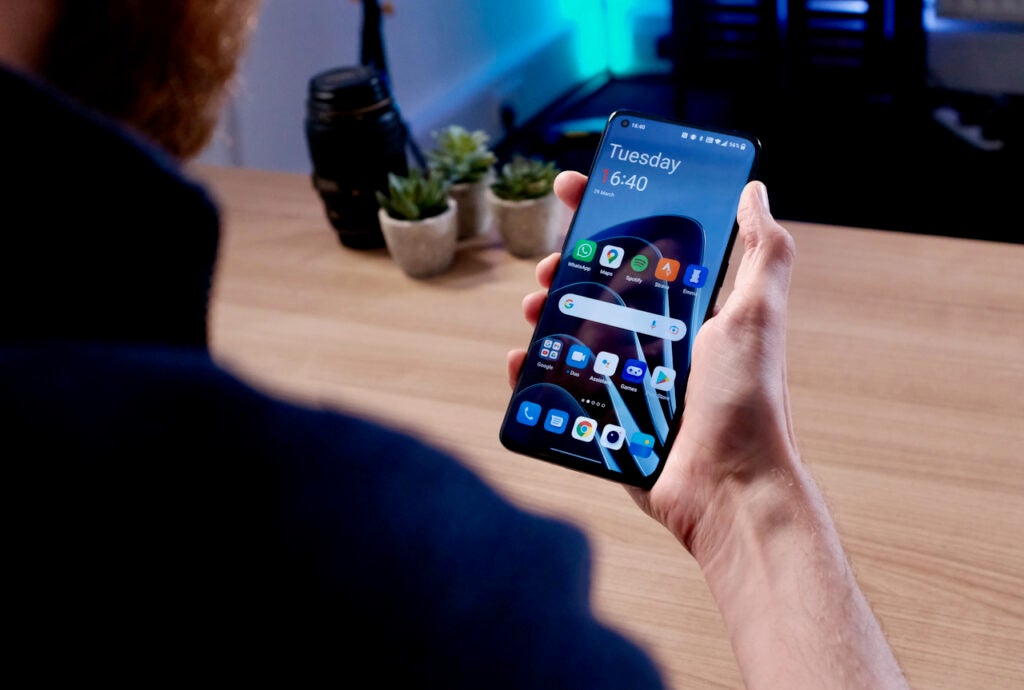
The phone is big, measuring 163 x 73.9 x 8.6mm, though not particularly weighty at 206g, and so I did not find it difficult to use with one hand unless trying to reach right up to the top of the screen.
As for the display, there are likely to be far fewer complaints – if any – than there may be about the design. The 6.7-inch LTPO panel has a very sharp QHD+ resolution, and a variable refresh rate that can auto-adjust between a maximum of 120Hz, which makes scrolling seem silky smooth, and all the way down to just 1Hz when it’s not in active use in order to save battery life. There’s HDR10+ support, which brings colours bursting out when you’re watching videos, and it’s very bright indeed with a reported peak brightness of 1300 nits likely when you’re viewing HDR content.
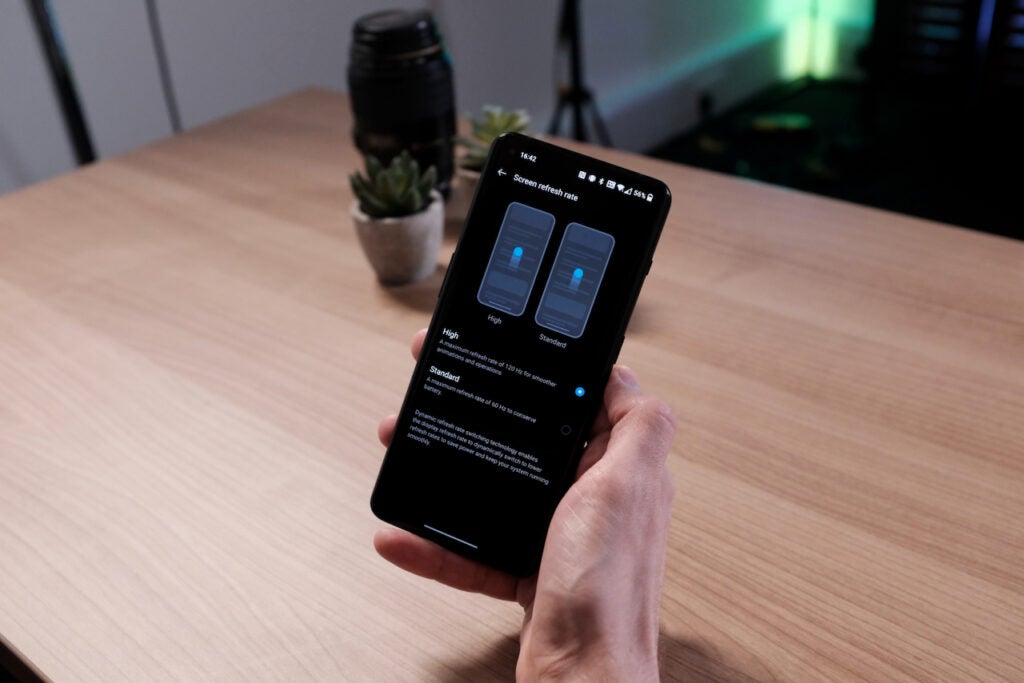
Just bear in mind that you may have to manually adjust some aspects in order to get the very best out of this display, such as increasing the resolution, sharpening the image, enhancing video colours, and enabling Bright HDR mode, all of which can be done in the Settings app.
During my time with the phone I’ve found the display is a joy to use, being bright, punchy, and smooth. Whether you’re watching videos or playing games, you’ll find it to provide a very immersive and fluid experience. At this price point, it’s hard to imagine that this isn’t the very best screen that you can get for your money, so if you consume a lot of content on your phone then this would be a good buy.
Camera
- Versatile camera system
- Results aren’t as good as the best on the market
There are three camera sensors on the rear of this phone; the main sensor has a 48-megapixel resolution, and it’s accompanied by an 8-megapixel telephoto lens with 3.3x optical zoom, and a 50-megapixel ultrawide sensor with 150-degree field of view.
OnePlus also has a partnership with camera specialists Hasselblad, as evidenced by the branding on the camera module and the distinctive orange shutter button; but more substantively, it’s this alliance that helps all three sensors to shoot in full 10-bit colour.
These three sensors evidently provide a great deal of versatility, letting you take a wide range of pictures depending on the context you find yourself in.

However, I wasn’t bowled over by the quality of images taken on this device. Firstly, although the variety of lenses is welcome, there isn’t a very consistent colour palette between the three. Just look at the following images that were taken from the same spot:

The above picture was taken by the telephoto lens on its standard 3.3x optical zoom setting.

This image directly above was taken by the main camera; while the one below was snapped by the ultrawide lens.

The main sensor mostly performs well, but in some contexts the images lack the richness that I would have expected; for example, in the cherry blossom in the below picture:

Images taken by the ultrawide camera seem even more washed out in comparison to the other lenses. The below picture was taken by the main camera, and the one below that was taken by the ultrawide, from the same position.

As you can see, this one below does not have quite the same depth of colour – whereas more specialist devices like the Oppo Find X5 Pro really excel in this field.

Detail takes a little bit of a hit when you’re capturing photos indoors under dark settings, especially when compared to other flagships, but the results are still pretty good:

Below is the telephoto working at its 3.3x optical zoom – but if you try pushing it further than that with digital zoom, the returns are diminishing, and it’s certainly not a specialist in this area like the Samsung Galaxy S22 Ultra.

And when outdoors, Night Mode evidently adds some warmth to the image and reduces the effects of blaring highlights from street lamps for instance. The image directly below was taken without Night Mode:

This picture is of the same scene, but with Night Mode applied:

The 32-megapixel selfie camera worked well in my experience, giving natural and realistic pictures that were very detailed, and in Portrait Mode it cuts efficiently around the subject for a pleasing bokeh effect.

Video results are good, with the camera capable of filming in 4K at 120fps (or even 8K, but at 24fps). The picture is sharp, and stabilisation (via Electronic Image Stabilisation) has worked effectively in my usage experience. Important changes to video capture include the introduction of Movie, which lets you adjust IO, shutter speed, and white balance both before and during filming for extra customisation.
Overall, although the OnePlus 10 Pro promises a great deal of versatility with its camera, the results were pretty inconsistent, and not up to the same grade as the best camera phones that we’ve tested.
Performance
- Good performance
- Benchmark scores a tad lower than peers
- Games ran well
- Appealing OxygenOS software
The OnePlus 10 Pro boasts Qualcomm’s top of the range Snapdragon 8 Gen 1 mobile processor, which is built on a very efficient 4nm process and based on our experience reviewing other phones running it, is among the very best on the market right now. You’ll find the same chip in the Xiaomi 12 Pro, and some variants of the Samsung Galaxy S22 Ultra.
When running through my normal day-to-day tasks, I never noticed a hint of lag nor any bugs, and when playing demanding games the results were fantastic – everything ran very smoothly, and the GPU combined with this excellent screen made for a brilliant mobile gaming experience. This may well be thanks to the HyperBoost Gaming Engine on board, which works to reduce frame rate fluctuation and increases the synchronisation speed between the processor and the display by up to six times when gaming, thereby reducing response times by up to 30 milliseconds.
I tested it with standard benchmarking software, and you can see the results below:
OnePlus 10 Pro Benchmark Score Comparison
Geekbench 5 single core
Geekbench 5 multi core
3D Mark – Wild Life
›
If you scroll across then you’ll notice that the CPU scores do actually underperform somewhat when compared to its counterparts, but the GPU scores are very good. Usually OnePlus manages to squeeze the very best out of its chips, so I was a little surprised to see it come up a tad short against the likes of the Samsung Galaxy S22 Ultra and even the Realme GT 2 Pro for that matter. However, as I said, I did not notice any performance discrepancies…

Trusted Reviews, es un sitio web internacional que ofrece puntos de vista critico y analítico sobre gadgets y últimas tecnologías como smartphones y macbooks, laptops, PC y diversos accesorios de sus características y opinión acerca de la informática general.